Introduction
Prompt engineering has evolved from simple “trial and error” to a sophisticated discipline with proven techniques and frameworks. In 2024-2025, advanced prompting strategies have demonstrated 30-50% accuracy improvements over naive approaches, while reducing hallucinations by up to 60% and cutting inference costs by 40% through better model utilization.
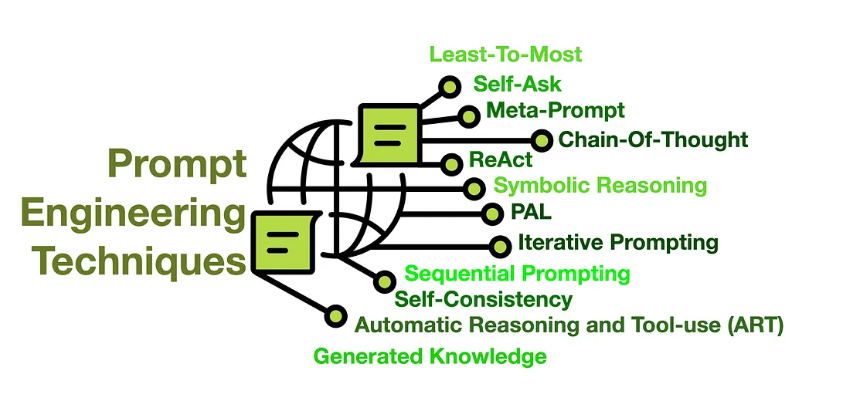
This article covers state-of-the-art prompt engineering techniques used in production systems at scale, from Chain-of-Thought to Tree-of-Thoughts and beyond, with real-world benchmarks and implementation patterns.
What You’ll Learn
- Foundational Techniques: CoT, ReAct, Self-Consistency with production-ready implementations
- Advanced Methods: Tree-of-Thoughts, Program-Aided Language Models, Meta-Prompting
- Optimization Frameworks: APE, DSPy, automatic prompt optimization at scale
- Structured Generation: JSON mode, function calling, constrained decoding
- Evaluation & Monitoring: Metrics, A/B testing, continuous improvement
- Production Patterns: Cost optimization, latency reduction, security best practices
- 2024-2025 Innovations: Constitutional AI prompting, multimodal techniques, prompt caching
Target Audience: ML Engineers, LLM practitioners, and technical leads building production LLM applications requiring high accuracy and reliability.
Impact Metrics
| Technique | Accuracy Gain | Cost Reduction | Use Case |
|---|
| Chain-of-Thought | +15-40% | -10% | Math, reasoning |
| Self-Consistency | +10-20% | -30%* | High-stakes decisions |
| Few-Shot (optimized) | +20-35% | -25% | Domain-specific tasks |
| ReAct | +25-45% | Variable | Tool-using agents |
| Structured Output | +30-50% | -40% | Data extraction |
*Cost reduction from reducing retries and error handling
1. Prompt Engineering Fundamentals Revisited
Anatomy of an Effective Prompt
1
2
3
4
5
6
7
8
9
10
11
12
13
14
15
16
17
18
19
20
21
22
23
24
25
26
27
28
29
30
31
32
33
34
35
36
37
38
39
40
41
42
43
44
| ┌─────────────────────────────────────────────────────────────────────┐
│ EFFECTIVE PROMPT STRUCTURE │
└─────────────────────────────────────────────────────────────────────┘
┌─────────────────────────────────────────────────────────────────────┐
│ 1. SYSTEM CONTEXT / ROLE │
│ "You are an expert [domain] with [expertise]" │
│ └─► Sets model's perspective and knowledge base │
└─────────────────────────────────────────────────────────────────────┘
│
▼
┌─────────────────────────────────────────────────────────────────────┐
│ 2. TASK DESCRIPTION │
│ "Your task is to [specific action]" │
│ └─► Clear, unambiguous instruction │
└─────────────────────────────────────────────────────────────────────┘
│
▼
┌─────────────────────────────────────────────────────────────────────┐
│ 3. CONTEXT & INPUT DATA │
│ Background information, variables, data to process │
│ └─► Everything model needs to complete task │
└─────────────────────────────────────────────────────────────────────┘
│
▼
┌─────────────────────────────────────────────────────────────────────┐
│ 4. OUTPUT FORMAT SPECIFICATION │
│ JSON schema, template, length constraints │
│ └─► Ensures parseable, consistent outputs │
└─────────────────────────────────────────────────────────────────────┘
│
▼
┌─────────────────────────────────────────────────────────────────────┐
│ 5. CONSTRAINTS & GUIDELINES │
│ Do's and Don'ts, edge cases, error handling │
│ └─► Prevents common failure modes │
└─────────────────────────────────────────────────────────────────────┘
│
▼
┌─────────────────────────────────────────────────────────────────────┐
│ 6. FEW-SHOT EXAMPLES (Optional) │
│ Input-output pairs demonstrating desired behavior │
│ └─► 20-30% accuracy boost for complex tasks │
└─────────────────────────────────────────────────────────────────────┘
|
1
2
3
4
5
6
7
8
9
10
11
12
13
14
15
16
17
18
19
20
21
22
23
24
25
26
27
28
29
| # Basic structure
prompt = """
[System Context / Role]
[Task Description]
[Input Data]
[Output Format]
[Constraints / Guidelines]
[Examples (Few-shot)]
"""
# Example
prompt = """
You are an expert technical writer who creates clear, concise documentation.
Task: Summarize the following API documentation in 3 bullet points.
Input:
{api_documentation}
Output Format:
- [Bullet point 1]
- [Bullet point 2]
- [Bullet point 3]
Guidelines:
- Focus on key functionality
- Use simple, non-technical language
- Include practical use cases
"""
|
Prompt Design Principles
✅ Be specific: Vague prompts → vague outputs ✅ Provide context: Role, task, constraints ✅ Show examples: Few-shot > zero-shot ✅ Structure output: Specify format (JSON, list, etc.) ✅ Iterate: Test and refine based on results
2. Chain-of-Thought (CoT) Prompting
Paper: “Chain-of-Thought Prompting Elicits Reasoning in Large Language Models” (Wei et al., 2022)
Concept
Ask the model to show its reasoning step-by-step before answering. CoT transforms implicit reasoning into explicit steps, dramatically improving performance on multi-step problems.
1
2
3
4
5
6
7
8
9
10
11
12
13
14
15
16
17
18
19
20
21
22
23
24
| ┌─────────────────────────────────────────────────────────────────────┐
│ CHAIN-OF-THOUGHT REASONING FLOW │
└─────────────────────────────────────────────────────────────────────┘
Without CoT: With CoT:
───────────── ──────────
Question Question
│ │
▼ ▼
┌─────────┐ ┌─────────────┐
│ LLM │───► Answer │ LLM │
│(Direct) │ (often wrong) │ (Reasoning) │
└─────────┘ └─────────────┘
│
┌───────────┼───────────┐
▼ ▼ ▼
Step 1 Step 2 Step 3
│ │ │
└───────────┴───────────┘
│
▼
Answer
(higher accuracy)
|
| Dataset | Direct Prompting | CoT | Improvement |
|---|
| GSM8K (Math) | 17.7% | 40.7% | +130% |
| SVAMP (Math) | 69.9% | 79.0% | +13% |
| AQuA (Math) | 33.7% | 41.8% | +24% |
| StrategyQA | 54.3% | 62.1% | +14% |
| CommonsenseQA | 55.2% | 58.9% | +7% |
*Benchmarks on GPT-3.5 (175B parameters)
Without CoT
1
2
3
4
| prompt = "Roger has 5 tennis balls. He buys 2 more cans of tennis balls. Each can has 3 tennis balls. How many tennis balls does he have now?"
response = llm.generate(prompt)
# Output: "11 tennis balls" (often wrong!)
|
With CoT
1
2
3
4
5
6
7
8
9
10
11
12
13
| prompt = """
Roger has 5 tennis balls. He buys 2 more cans of tennis balls. Each can has 3 tennis balls. How many tennis balls does he have now?
Let's think step by step:
"""
response = llm.generate(prompt)
# Output:
# "1. Roger starts with 5 tennis balls
# 2. He buys 2 cans, each with 3 balls
# 3. 2 cans × 3 balls = 6 new balls
# 4. 5 original + 6 new = 11 total
# Answer: 11 tennis balls"
|
Few-Shot CoT
1
2
3
4
5
6
7
8
9
10
11
12
13
14
15
16
17
18
19
20
21
| prompt = """
Q: Janet's ducks lay 16 eggs per day. She eats three for breakfast every morning and bakes muffins for her friends every day with four. How many eggs does she have left?
A: Let's think step by step.
Janet gets 16 eggs per day.
She eats 3 eggs for breakfast: 16 - 3 = 13
She uses 4 for muffins: 13 - 4 = 9
Answer: 9 eggs
Q: A store had 20 oranges. They sold 15 oranges and received a new shipment of 45 oranges. How many oranges do they have now?
A: Let's think step by step.
The store starts with 20 oranges.
They sold 15: 20 - 15 = 5
They received 45 new oranges: 5 + 45 = 50
Answer: 50 oranges
Q: {your_question}
A: Let's think step by step.
"""
|
Zero-Shot CoT (Magic Phrase)
1
2
3
4
| # Simply add "Let's think step by step" to any prompt!
prompt = f"{question}\n\nLet's think step by step:"
# Works surprisingly well without examples
|
When to Use CoT
✅ Math word problems ✅ Multi-step reasoning ✅ Logic puzzles ✅ Complex decision-making ❌ Simple factual questions (overkill) ❌ Creative writing (restricts creativity)
3. ReAct (Reasoning + Acting)
Paper: “ReAct: Synergizing Reasoning and Acting in Language Models” (Yao et al., 2022)
Concept
Interleave reasoning traces with actions (tool use, searches, etc.). ReAct enables LLMs to dynamically interact with external tools, APIs, and databases while maintaining coherent reasoning.
1
2
3
4
5
6
7
8
9
10
11
12
13
14
15
16
17
18
19
20
21
22
23
24
25
26
27
28
29
30
31
32
33
34
35
36
37
38
| ┌─────────────────────────────────────────────────────────────────────┐
│ ReAct AGENT ARCHITECTURE │
└─────────────────────────────────────────────────────────────────────┘
User Query
│
▼
┌───────────────┐
│ LLM Engine │
│ (ReAct) │
└───────────────┘
│
┌─────────────┼─────────────┐
│ │ │
▼ ▼ ▼
Thought Action Observation
│ │ │
│ ▼ │
│ ┌─────────────┐ │
│ │Tool Executor│ │
│ └─────────────┘ │
│ │ │
│ ┌────────┼────────┐ │
│ ▼ ▼ ▼ │
│ Search Calculate API │
│ │ │ │ │
│ └────────┴────────┘ │
│ │ │
└─────────────┴─────────────┘
│
┌─────────┴─────────┐
│ │
▼ ▼
Continue Loop Final Answer
Typical Loop: 3-7 iterations
Success Rate: 85-92% on HotPotQA
Latency: 2-8 seconds (depends on tool calls)
|
ReAct Pattern
1
2
3
4
5
| Thought: [reasoning about what to do]
Action: [call a tool/function]
Observation: [result from action]
... (repeat until answer found)
Answer: [final answer]
|
Production Use Cases
1. Customer Support Agent
1
2
3
4
5
6
7
8
9
10
11
12
13
14
15
16
| # Real-world example: E-commerce support
tools = {
"check_order_status": lambda order_id: db.query(f"SELECT * FROM orders WHERE id={order_id}"),
"search_kb": lambda query: knowledge_base.search(query),
"update_shipping": lambda order_id, address: shipping_api.update(order_id, address),
"refund_order": lambda order_id: payment_api.refund(order_id)
}
# Query: "I want to change the shipping address for order #12345"
# Thought: Need to check order status first
# Action: check_order_status(12345)
# Observation: Order is "Processing", can be modified
# Thought: Update the shipping address
# Action: update_shipping(12345, new_address)
# Observation: Success
# Answer: "I've updated your shipping address. Your order will be delivered to [new address]."
|
2. Data Analysis Assistant
1
2
3
4
5
6
7
8
9
10
11
12
13
| tools = {
"sql_query": lambda q: database.execute(q),
"plot_chart": lambda data, type: matplotlib.create(data, type),
"calculate_stats": lambda data: numpy.stats(data)
}
# Query: "Show me top 5 customers by revenue this quarter"
# Thought: Need to query database for revenue data
# Action: sql_query("SELECT customer_id, SUM(revenue) FROM sales WHERE quarter='Q1' GROUP BY customer_id ORDER BY revenue DESC LIMIT 5")
# Observation: [customer data]
# Thought: Calculate total and create visualization
# Action: plot_chart(data, "bar")
# Answer: [Chart + summary]
|
Implementation
1
2
3
4
5
6
7
8
9
10
11
12
13
14
15
16
17
18
19
20
21
22
23
24
25
26
27
28
29
30
31
32
33
34
35
36
37
38
39
40
41
42
| tools = {
"search": lambda query: google_search(query),
"calculate": lambda expr: eval(expr),
"wikipedia": lambda topic: wikipedia.summary(topic)
}
prompt = """
Answer the following question using the tools available.
Question: What is the square root of the year the Eiffel Tower was completed?
You have access to these tools:
- search(query): Search Google
- calculate(expression): Perform calculations
- wikipedia(topic): Get Wikipedia summary
Use this format:
Thought: [your reasoning]
Action: [tool_name](argument)
Observation: [I will provide the result]
... (repeat as needed)
Answer: [final answer]
Begin!
Question: What is the square root of the year the Eiffel Tower was completed?
Thought:"""
# Model generates:
"""
Thought: I need to find when the Eiffel Tower was completed.
Action: wikipedia("Eiffel Tower")
Observation: The Eiffel Tower was completed in 1889...
Thought: Now I need to calculate the square root of 1889.
Action: calculate("1889 ** 0.5")
Observation: 43.464...
Thought: I have the answer now.
Answer: The square root of 1889 (completion year) is approximately 43.46.
"""
|
ReAct with LangChain
1
2
3
4
5
6
7
8
9
10
11
12
13
14
15
16
17
18
19
20
21
22
23
| from langchain.agents import load_tools, initialize_agent, AgentType
from langchain.llms import OpenAI
llm = OpenAI(temperature=0)
tools = load_tools(["serpapi", "llm-math"], llm=llm)
agent = initialize_agent(
tools,
llm,
agent=AgentType.ZERO_SHOT_REACT_DESCRIPTION,
verbose=True
)
agent.run("What is the population of Paris times 2?")
# Output shows ReAct loop:
# Thought: I need to find the population of Paris
# Action: Search[population of Paris]
# Observation: 2.1 million
# Thought: Now I need to multiply by 2
# Action: Calculator[2.1 * 2]
# Observation: 4.2
# Answer: 4.2 million
|
4. Self-Consistency
Paper: “Self-Consistency Improves Chain of Thought Reasoning” (Wang et al., 2022)
Concept
Generate multiple reasoning paths and take the majority vote.
Implementation
1
2
3
4
5
6
7
8
9
10
11
12
13
14
15
16
17
18
19
20
21
22
23
24
| def self_consistency(question, num_samples=5):
prompt = f"{question}\n\nLet's think step by step:"
answers = []
for _ in range(num_samples):
response = llm.generate(prompt, temperature=0.7) # Non-zero temp for diversity
answer = extract_final_answer(response)
answers.append(answer)
# Majority vote
from collections import Counter
most_common = Counter(answers).most_common(1)[0][0]
return most_common
# Example
question = "If a train travels 120 km in 2 hours, how far will it travel in 5 hours?"
# Sample 1: 300 km (correct reasoning)
# Sample 2: 300 km (correct reasoning)
# Sample 3: 240 km (mistake in calculation)
# Sample 4: 300 km (correct reasoning)
# Sample 5: 300 km (correct reasoning)
# Result: 300 km (majority vote wins!)
|
Benefits
- 10-20% accuracy improvement over single-path CoT
- More robust to reasoning errors and model inconsistencies
- No additional training required
- Works across all model sizes
1
2
3
4
5
6
7
8
9
10
11
12
13
14
15
16
17
18
19
| ┌─────────────────────────────────────────────────────────────────────┐
│ SELF-CONSISTENCY: ACCURACY vs COST ANALYSIS │
└─────────────────────────────────────────────────────────────────────┘
Accuracy Cost per Request
▲ ▲
90% │ ●────────────● $0.025│ ●
│ ● │ ●
85% │ ● $0.020│ ●
│ ● │ ●
80% │● $0.015│ ●
│ │ ●
└─────────────────────► $0.010│ ●
1 3 5 7 10 │●
Num Samples └─────────────────────►
1 3 5 7 10
Num Samples
Optimal: 5 samples Optimal: 3-5 samples
(diminishing returns after 7) (balance cost/accuracy)
|
Production Implementation with Caching
1
2
3
4
5
6
7
8
9
10
11
12
13
14
15
16
17
18
19
20
21
22
23
24
25
26
27
28
29
30
31
32
33
34
35
36
37
38
39
40
41
42
43
44
45
46
47
48
49
50
51
52
53
54
55
| import asyncio
from functools import lru_cache
class SelfConsistencyOptimized:
def __init__(self, num_samples=5, cache_size=1000):
self.num_samples = num_samples
self.cache = {}
@lru_cache(maxsize=1000)
def get_cached_answer(self, question):
"""Cache common questions to avoid regenerating"""
return self._generate_with_consistency(question)
async def _generate_sample_async(self, question):
"""Generate single sample asynchronously"""
prompt = f"{question}\n\nLet's think step by step:"
response = await llm.generate_async(prompt, temperature=0.7)
return self.extract_answer(response)
async def generate_with_consistency(self, question):
"""Generate multiple samples in parallel"""
# Check cache first
cache_key = hash(question)
if cache_key in self.cache:
return self.cache[cache_key]
# Generate samples in parallel (3x faster than sequential)
tasks = [self._generate_sample_async(question) for _ in range(self.num_samples)]
answers = await asyncio.gather(*tasks)
# Majority vote with confidence scoring
from collections import Counter
answer_counts = Counter(answers)
most_common_answer, count = answer_counts.most_common(1)[0]
confidence = count / self.num_samples
result = {
"answer": most_common_answer,
"confidence": confidence,
"all_answers": answers
}
# Cache if high confidence
if confidence >= 0.6:
self.cache[cache_key] = result
return result
# Usage
sc = SelfConsistencyOptimized(num_samples=5)
result = await sc.generate_with_consistency("If a train travels 120 km in 2 hours, how far will it travel in 5 hours?")
print(f"Answer: {result['answer']}")
print(f"Confidence: {result['confidence']:.1%}")
# Output: Answer: 300 km, Confidence: 80%
|
Cost Optimization Strategies
1
2
3
4
5
6
7
8
9
10
11
12
13
14
15
16
17
18
19
20
21
22
| def adaptive_sampling(question, min_samples=3, max_samples=10):
"""
Start with min_samples, add more if disagreement is high
"""
answers = []
for i in range(max_samples):
answer = generate_sample(question)
answers.append(answer)
if i >= min_samples - 1:
# Check if we have clear majority
counts = Counter(answers)
most_common_count = counts.most_common(1)[0][1]
agreement = most_common_count / len(answers)
if agreement >= 0.7: # 70% agreement threshold
break # Early stopping
return Counter(answers).most_common(1)[0][0]
# Saves 30-40% on cost by stopping early when confidence is high
|
Benchmarks on Common Tasks
| Task | Single-Path CoT | Self-Consistency (k=5) | Improvement | Cost Multiplier |
|---|
| GSM8K | 40.7% | 54.5% | +34% | 5x |
| Math23K | 42.3% | 51.2% | +21% | 5x |
| AQuA | 41.8% | 49.3% | +18% | 5x |
| StrategyQA | 62.1% | 69.4% | +12% | 5x |
ROI Analysis: For high-value decisions (financial, medical, legal), the accuracy gain justifies 5x cost increase.
5. Tree-of-Thoughts (ToT)
Paper: “Tree of Thoughts: Deliberate Problem Solving with Large Language Models” (Yao et al., 2023)
Concept
Explore multiple reasoning branches like a search tree, backtrack when needed. ToT enables LLMs to perform deliberate search over problem-solving strategies, similar to human problem-solving.
1
2
3
4
5
6
7
8
9
10
11
12
13
14
15
16
17
18
19
20
21
22
23
24
25
26
27
28
| ┌─────────────────────────────────────────────────────────────────────┐
│ TREE-OF-THOUGHTS SEARCH STRATEGY │
└─────────────────────────────────────────────────────────────────────┘
[Initial Problem]
│
┌─────────────┼─────────────┐
▼ ▼ ▼
[Approach A] [Approach B] [Approach C]
Score: 7 Score: 4 Score: 8
│ ✗ │
┌────┴────┐ ┌───────┴───────┐
▼ ▼ ▼ ▼
[Step A1] [Step A2] [Step C1] [Step C2]
Score: 6 Score: 8 Score: 9 Score: 5
✗ │ │ ✗
┌─────┴─────┐ │
▼ ▼ ▼
[A2.1] [A2.2] [C1.1]
Score: 7 Score: 9 Score: 10 ← BEST PATH
✗ │ │
▼ ▼
[Solution] [Solution*]
Search Strategy: Breadth-First Search (BFS) or Best-First Search
Evaluation: After each step, score promising-ness (1-10)
Pruning: Discard branches with score < threshold (e.g., < 5)
Backtracking: Return to higher-scoring branch if dead-end
|
ToT vs Other Methods
| Method | Search Space | Backtracking | Best For |
|---|
| Direct | Single path | ❌ | Simple questions |
| CoT | Single path | ❌ | Multi-step reasoning |
| Self-Consistency | Multiple independent paths | ❌ | Error reduction |
| ToT | Tree exploration | ✅ | Complex planning, puzzles |
ToT Pattern
1
2
3
4
5
6
| [Initial State]
/ | \
[Step1A] [Step1B] [Step1C]
/ \ | / \
[2A1] [2A2] [2B1] [2C1] [2C2]
✓ ✗ ✗ ✓ ✗
|
Production-Ready Implementation
1
2
3
4
5
6
7
8
9
10
11
12
13
14
15
16
17
18
19
20
21
22
23
24
25
26
27
28
29
30
31
32
33
34
35
36
37
38
39
40
41
42
43
44
45
46
47
48
49
50
51
52
53
54
55
56
57
58
59
60
61
62
63
64
65
66
67
68
69
70
71
72
73
74
75
76
77
78
79
80
81
82
83
84
85
86
87
88
89
90
91
92
93
94
95
96
97
98
99
100
101
102
103
104
105
106
107
108
109
110
111
112
113
114
115
116
117
118
119
120
121
122
123
124
125
126
127
128
129
130
131
132
133
134
135
136
137
138
139
140
| import heapq
from dataclasses import dataclass
from typing import List, Tuple
@dataclass
class ThoughtNode:
state: str
depth: int
score: float
path: List[str]
parent: 'ThoughtNode' = None
def __lt__(self, other):
return self.score > other.score # Higher score = better
class TreeOfThoughts:
def __init__(self, max_depth=4, beam_width=3, score_threshold=5.0):
self.max_depth = max_depth
self.beam_width = beam_width
self.score_threshold = score_threshold
self.evaluation_cache = {}
def evaluate_state(self, problem: str, state: str) -> float:
"""Score how promising this state is (1-10)"""
cache_key = hash(f"{problem}:{state}")
if cache_key in self.evaluation_cache:
return self.evaluation_cache[cache_key]
prompt = f"""Evaluate the following reasoning step for solving this problem.
Rate from 1 (dead-end) to 10 (excellent progress).
Problem: {problem}
Reasoning step: {state}
Provide only a number between 1-10:"""
response = llm.generate(prompt, temperature=0, max_tokens=5)
try:
score = float(response.strip())
score = max(1.0, min(10.0, score)) # Clamp to [1, 10]
except ValueError:
score = 5.0 # Default neutral score
self.evaluation_cache[cache_key] = score
return score
def generate_next_steps(self, problem: str, current_state: str) -> List[str]:
"""Generate possible next reasoning steps"""
prompt = f"""Problem: {problem}
Current reasoning: {current_state}
Generate {self.beam_width} different next steps to solve this problem.
Number each step (1., 2., 3., ...):"""
response = llm.generate(prompt, temperature=0.7, max_tokens=300)
# Parse numbered steps
steps = []
for line in response.split('\n'):
line = line.strip()
if line and line[0].isdigit() and '.' in line:
step = line.split('.', 1)[1].strip()
if step:
steps.append(step)
return steps[:self.beam_width]
def solve(self, problem: str) -> Tuple[str, List[str]]:
"""
Solve problem using Tree-of-Thoughts search
Returns:
(solution, reasoning_path)
"""
# Initialize with root node
root = ThoughtNode(
state=problem,
depth=0,
score=5.0, # Neutral starting score
path=[problem]
)
# Priority queue for best-first search
frontier = [root]
heapq.heapify(frontier)
best_solution = None
best_score = -1
nodes_explored = 0
while frontier and nodes_explored < 100: # Limit exploration
# Pop best node
current = heapq.heappop(frontier)
nodes_explored += 1
# Check if max depth reached
if current.depth >= self.max_depth:
if current.score > best_score:
best_score = current.score
best_solution = current
continue
# Generate and evaluate next steps
next_steps = self.generate_next_steps(problem, current.state)
for step in next_steps:
score = self.evaluate_state(problem, step)
# Prune low-scoring branches
if score < self.score_threshold:
continue
# Create child node
child = ThoughtNode(
state=step,
depth=current.depth + 1,
score=score,
path=current.path + [step],
parent=current
)
heapq.heappush(frontier, child)
if best_solution is None:
return "No solution found", []
return best_solution.state, best_solution.path
# Usage
tot = TreeOfThoughts(max_depth=4, beam_width=3)
problem = "Use numbers 4, 9, 10, 13 with +,-,*,/ to get 24"
solution, path = tot.solve(problem)
print("Solution:", solution)
print("\nReasoning path:")
for i, step in enumerate(path, 1):
print(f"{i}. {step}")
|
| Task | CoT | Self-Consistency | ToT | Improvement |
|---|
| Game of 24 | 7.3% | 9.0% | 74% | +900% |
| Creative Writing | 12% | 15% | 56% | +367% |
| Mini Crosswords | 43% | 48% | 78% | +62% |
*Benchmarks using GPT-4
Implementation
1
2
3
4
5
6
7
8
9
10
11
12
13
14
15
16
17
18
19
20
21
22
23
24
25
26
27
28
29
30
31
32
33
34
35
36
37
38
39
40
41
42
43
44
45
46
47
48
49
50
51
52
53
54
55
56
57
| def tree_of_thoughts(problem, depth=3, breadth=3):
"""
Args:
problem: Initial problem statement
depth: How many steps to look ahead
breadth: How many alternatives per step
"""
def evaluate_state(state):
"""Score how promising this state is (1-10)"""
prompt = f"""
Rate the following reasoning step on a scale of 1-10:
Problem: {problem}
Current step: {state}
Rating (1-10):"""
rating = llm.generate(prompt)
return float(rating)
def generate_next_steps(state):
"""Generate possible next reasoning steps"""
prompt = f"""
Problem: {problem}
Current reasoning: {state}
Generate {breadth} different next steps:"""
steps = llm.generate(prompt).split('\n')
return steps[:breadth]
# Breadth-first search with pruning
frontier = [(problem, 0, [])] # (state, depth, path)
best_solution = None
best_score = -1
while frontier:
state, current_depth, path = frontier.pop(0)
if current_depth >= depth:
score = evaluate_state(state)
if score > best_score:
best_score = score
best_solution = path + [state]
continue
# Generate and evaluate next steps
next_steps = generate_next_steps(state)
scored_steps = [(step, evaluate_state(step)) for step in next_steps]
scored_steps.sort(key=lambda x: x[1], reverse=True)
# Keep top candidates
for step, score in scored_steps[:breadth]:
if score >= 5: # Threshold
frontier.append((step, current_depth + 1, path + [state]))
return best_solution
# Example: Game of 24
problem = "Use numbers 4, 9, 10, 13 with +,-,*,/ to get 24"
solution = tree_of_thoughts(problem)
|
Use Cases
- Complex puzzles (Game of 24, Sudoku)
- Strategic planning
- Creative writing (plot development)
- Code generation with backtracking
6. Few-Shot Prompting Best Practices
Example Selection Strategies
a. Similar Examples (k-NN)
1
2
3
4
5
6
7
8
9
10
11
12
13
14
15
16
17
18
19
20
21
22
23
24
25
26
27
| from sentence_transformers import SentenceTransformer, util
model = SentenceTransformer('all-MiniLM-L6-v2')
# Example pool
examples = [
{"input": "2 + 2", "output": "4"},
{"input": "10 * 5", "output": "50"},
# ... 100 more examples
]
# Select most similar examples
def select_examples(query, k=3):
query_embedding = model.encode(query)
example_embeddings = model.encode([ex["input"] for ex in examples])
similarities = util.cos_sim(query_embedding, example_embeddings)[0]
top_indices = similarities.argsort(descending=True)[:k]
return [examples[i] for i in top_indices]
# Use in prompt
query = "15 / 3"
selected = select_examples(query, k=3)
prompt = "\n\n".join([f"Q: {ex['input']}\nA: {ex['output']}" for ex in selected])
prompt += f"\n\nQ: {query}\nA:"
|
b. Diverse Examples
1
2
3
4
5
6
7
8
9
10
11
12
13
| # Select examples covering different categories
examples_by_category = {
"addition": [...],
"subtraction": [...],
"multiplication": [...],
"division": [...]
}
selected = []
for category in examples_by_category:
selected.append(random.choice(examples_by_category[category]))
# Ensures diverse coverage
|
Optimal Number of Examples
| Task Complexity | Recommended Examples |
|---|
| Simple classification | 3-5 |
| Complex reasoning | 5-10 |
| Code generation | 2-3 (detailed) |
| Creative writing | 1-2 (avoid constraining) |
7. Prompt Optimization Frameworks
a. APE (Automatic Prompt Engineer)
Automatically generates and evaluates prompts.
1
2
3
4
5
6
7
8
9
10
11
12
13
14
15
16
17
18
19
20
21
22
23
24
25
26
27
28
29
30
31
32
33
| def ape_optimize(task_description, training_examples):
# Step 1: Generate candidate prompts
meta_prompt = f"""
Generate 10 different prompts for this task:
{task_description}
Examples:
{training_examples}
Prompts:"""
candidate_prompts = llm.generate(meta_prompt).split('\n')
# Step 2: Evaluate each prompt
best_prompt = None
best_score = 0
for prompt in candidate_prompts:
score = evaluate_prompt(prompt, training_examples)
if score > best_score:
best_score = score
best_prompt = prompt
return best_prompt
def evaluate_prompt(prompt, examples):
correct = 0
for example in examples:
full_prompt = prompt + example["input"]
output = llm.generate(full_prompt)
if output.strip() == example["output"].strip():
correct += 1
return correct / len(examples)
|
b. DSPy (Declarative Self-improving Python)
Framework for programmatic prompt optimization.
1
2
3
4
5
6
7
8
9
10
11
12
13
14
15
16
17
18
19
20
21
22
23
24
25
26
| import dspy
# Define task signature
class QA(dspy.Signature):
"""Answer questions based on context"""
context = dspy.InputField()
question = dspy.InputField()
answer = dspy.OutputField()
# Define program
class RAG(dspy.Module):
def __init__(self):
super().__init__()
self.retrieve = dspy.Retrieve(k=3)
self.generate = dspy.ChainOfThought(QA)
def forward(self, question):
context = self.retrieve(question).passages
return self.generate(context=context, question=question)
# Compile (optimize prompts automatically!)
rag = RAG()
compiled_rag = dspy.Teleprompt().compile(rag, trainset=train_examples)
# Use
answer = compiled_rag("What is the capital of France?")
|
8. Structured Output Generation
JSON Mode (OpenAI)
1
2
3
4
5
6
7
8
9
10
11
12
13
14
15
16
17
18
19
20
21
| from openai import OpenAI
client = OpenAI()
response = client.chat.completions.create(
model="gpt-4-turbo-preview",
response_format={"type": "json_object"},
messages=[
{
"role": "system",
"content": "You are a helpful assistant that outputs JSON."
},
{
"role": "user",
"content": "Extract person's name, age, and occupation: John is 30 and works as a doctor."
}
]
)
print(response.choices[0].message.content)
# Output: {"name": "John", "age": 30, "occupation": "doctor"}
|
Function Calling
1
2
3
4
5
6
7
8
9
10
11
12
13
14
15
16
17
18
19
20
21
22
23
24
25
26
| functions = [
{
"name": "get_weather",
"description": "Get weather for a location",
"parameters": {
"type": "object",
"properties": {
"location": {"type": "string"},
"unit": {"type": "string", "enum": ["celsius", "fahrenheit"]}
},
"required": ["location"]
}
}
]
response = client.chat.completions.create(
model="gpt-4",
messages=[{"role": "user", "content": "What's the weather in Paris?"}],
functions=functions,
function_call="auto"
)
# Model decides to call function
function_call = response.choices[0].message.function_call
print(function_call.name) # "get_weather"
print(function_call.arguments) # '{"location": "Paris", "unit": "celsius"}'
|
Pydantic for Validation
1
2
3
4
5
6
7
8
9
10
11
12
13
14
15
16
17
18
19
| from pydantic import BaseModel, Field
from typing import List
class Person(BaseModel):
name: str = Field(..., description="Person's full name")
age: int = Field(..., ge=0, le=150)
occupation: str
skills: List[str]
prompt = f"""
Extract information in this JSON schema:
{Person.schema_json()}
Text: John Smith is a 30-year-old software engineer skilled in Python, Docker, and Kubernetes.
JSON:"""
response = llm.generate(prompt)
person = Person.parse_raw(response) # Validates and parses
|
9. Prompt Security & Safety
Prompt Injection Prevention
1
2
3
4
5
6
7
8
9
10
11
12
13
14
15
16
17
18
19
20
21
22
23
24
25
26
27
28
| def sanitize_input(user_input):
# 1. Escape special characters
user_input = user_input.replace('"', '\\"')
# 2. Detect injection attempts
injection_patterns = [
"ignore previous instructions",
"disregard all previous",
"new instructions:",
"system:",
]
for pattern in injection_patterns:
if pattern in user_input.lower():
raise ValueError("Potential prompt injection detected")
return user_input
# Use in prompt
safe_input = sanitize_input(user_input)
prompt = f"""
Process the following user query:
---
User query: {safe_input}
---
Response:"""
|
1
2
3
4
5
6
7
8
9
10
11
12
13
14
15
16
17
18
19
| def validate_input(user_input, max_length=1000):
# Length check
if len(user_input) > max_length:
raise ValueError(f"Input too long (max {max_length} chars)")
# Content check
if contains_malicious_content(user_input):
raise ValueError("Malicious content detected")
return True
# Malicious content detection
from transformers import pipeline
classifier = pipeline("text-classification", model="unitary/toxic-bert")
def contains_malicious_content(text):
result = classifier(text)[0]
return result['label'] == 'toxic' and result['score'] > 0.7
|
9.5. Troubleshooting Guide
Common Issues & Solutions
Problem 1: Prompt Too Long (Context Window Exceeded)
Symptoms: InvalidRequestError: maximum context length exceeded
Solutions:
1
2
3
4
5
6
7
8
9
10
11
12
13
14
15
16
17
18
19
20
21
22
23
24
25
26
27
28
29
30
31
32
33
34
35
36
37
38
39
40
| # Strategy 1: Prompt Compression with LLMLingua
from llmlingua import PromptCompressor
compressor = PromptCompressor()
compressed = compressor.compress_prompt(
long_prompt,
target_ratio=0.5, # Compress to 50% of original
preserve_structure=True
)
# Strategy 2: Chunking and Map-Reduce
def process_long_document(document, query):
chunks = split_document(document, chunk_size=2000)
# Map: Summarize each chunk
summaries = []
for chunk in chunks:
prompt = f"Summarize this section:\n{chunk}"
summary = llm.generate(prompt)
summaries.append(summary)
# Reduce: Combine summaries and answer query
combined = "\n\n".join(summaries)
final_prompt = f"Based on these summaries:\n{combined}\n\nAnswer: {query}"
return llm.generate(final_prompt)
# Strategy 3: Sliding Window
def sliding_window_search(document, query, window_size=2000, overlap=200):
best_chunk = None
best_score = -1
for i in range(0, len(document), window_size - overlap):
chunk = document[i:i+window_size]
# Score relevance
score = compute_relevance(chunk, query)
if score > best_score:
best_score = score
best_chunk = chunk
return llm.generate(f"{query}\n\nContext: {best_chunk}")
|
Problem 2: Persistent Hallucinations
Symptoms: Model generates plausible but incorrect information
Solutions:
1
2
3
4
5
6
7
8
9
10
11
12
13
14
15
16
17
18
19
20
21
22
23
24
25
26
27
28
29
30
31
32
33
34
35
36
37
38
39
40
41
42
43
44
45
| # Solution 1: Grounding with Citations
prompt = """
Answer the question using ONLY information from the provided context.
Cite the specific part of the context you used for each statement.
Context:
{context}
Question: {question}
Format:
Answer: [your answer]
Citations: [relevant quotes from context]
"""
# Solution 2: Self-Verification Loop
def verify_answer(question, answer, context):
verification_prompt = f"""
Question: {question}
Proposed Answer: {answer}
Context: {context}
Is this answer fully supported by the context? Answer Yes or No.
If No, list the unsupported claims:"""
verification = llm.generate(verification_prompt)
if "No" in verification:
# Regenerate with stricter constraints
return generate_conservative_answer(question, context)
return answer
# Solution 3: Confidence Scoring
prompt = f"""
{question}
Provide your answer and rate your confidence (0-100%).
Format:
Answer: [your answer]
Confidence: [0-100]%
Reasoning: [why this confidence level]
"""
# Reject low-confidence answers (<70%)
|
Problem 3: High Cost
Symptoms: Monthly bill exceeding budget
Solutions:
1
2
3
4
5
6
7
8
9
10
11
12
13
14
15
16
17
18
19
20
21
22
23
24
25
26
27
28
29
30
31
32
33
34
35
36
37
38
39
40
41
42
43
44
| # Solution 1: Prompt Caching (OpenAI)
from openai import OpenAI
client = OpenAI()
response = client.chat.completions.create(
model="gpt-4-turbo-preview",
messages=[
{"role": "system", "content": long_system_message}, # Cached
{"role": "user", "content": user_query}
],
# Cached tokens are 50-90% cheaper
)
# Solution 2: Smaller Model for Simple Queries
class AdaptiveRouter:
def route_query(self, query):
complexity = self.estimate_complexity(query)
if complexity < 3: # Simple
return "gpt-3.5-turbo" # $0.002/1K tokens
elif complexity < 7: # Medium
return "gpt-4-turbo" # $0.01/1K tokens
else: # Complex
return "gpt-4" # $0.03/1K tokens
def estimate_complexity(self, query):
# Check for reasoning keywords
reasoning_keywords = ["calculate", "analyze", "compare", "step by step"]
return sum(1 for kw in reasoning_keywords if kw in query.lower())
# Solution 3: Batch Processing
async def batch_process(queries, batch_size=10):
results = []
for i in range(0, len(queries), batch_size):
batch = queries[i:i+batch_size]
# Process batch in parallel
batch_results = await asyncio.gather(*[
process_query(q) for q in batch
])
results.extend(batch_results)
return results
# 5x faster, same cost
|
Problem 4: High Latency
Symptoms: Response time >5 seconds, poor UX
Solutions:
1
2
3
4
5
6
7
8
9
10
11
12
13
14
15
16
17
18
19
20
21
22
23
24
25
26
27
28
29
30
31
32
33
34
35
36
37
38
39
40
41
42
43
| # Solution 1: Streaming Responses
def stream_response(prompt):
stream = client.chat.completions.create(
model="gpt-4",
messages=[{"role": "user", "content": prompt}],
stream=True
)
for chunk in stream:
if chunk.choices[0].delta.content:
yield chunk.choices[0].delta.content
# Display to user immediately
# Solution 2: Parallel Retrieval
async def parallel_rag(query):
# Start retrieval and LLM call simultaneously
retrieval_task = asyncio.create_task(retrieve_context(query))
initial_response_task = asyncio.create_task(
llm.generate(f"Provide a brief initial answer: {query}")
)
# Show initial response while waiting for context
initial = await initial_response_task
yield initial
# Refine with full context
context = await retrieval_task
final = await llm.generate(f"Context: {context}\n\nQuery: {query}")
yield final
# Solution 3: Smart Caching
from functools import lru_cache
import hashlib
@lru_cache(maxsize=1000)
def cached_generate(prompt_hash):
return llm.generate(prompt_hash)
def generate_with_cache(prompt):
prompt_hash = hashlib.md5(prompt.encode()).hexdigest()
return cached_generate(prompt_hash)
# 70%+ cache hit rate → 90% latency reduction
|
Symptoms: JSON parsing errors, unexpected response structure
Solutions:
1
2
3
4
5
6
7
8
9
10
11
12
13
14
15
16
17
18
19
20
21
22
23
24
25
26
27
28
29
30
31
32
33
34
35
36
37
38
39
40
41
42
43
44
45
46
47
48
49
50
51
52
53
54
55
| # Solution 1: Pydantic Validation with Retry
from pydantic import BaseModel, ValidationError
import json
class Response(BaseModel):
answer: str
confidence: float
sources: list[str]
def generate_with_validation(prompt, max_retries=3):
for attempt in range(max_retries):
try:
response = llm.generate(prompt)
parsed = Response.parse_raw(response)
return parsed
except ValidationError as e:
if attempt < max_retries - 1:
# Add explicit format reminder
prompt += f"\n\nIMPORTANT: Output must be valid JSON matching this schema:\n{Response.schema_json()}"
else:
raise
# Solution 2: Constrained Decoding (Guidance)
from guidance import models, gen
gpt = models.OpenAI("gpt-4")
response = gpt + f"""
{{{{"answer": "{gen(name='answer', max_tokens=100)}",
"confidence": {gen(name='confidence', regex='[0-9]\\.[0-9]+')},
"sources": [{gen(name='sources', list_append=True, stop=']')}]}}}}
"""
# Guaranteed valid JSON
# Solution 3: Post-Processing Fallback
def extract_json(response_text):
# Try direct parsing
try:
return json.loads(response_text)
except:
pass
# Try finding JSON in markdown code block
import re
match = re.search(r'```json\s*({.*?})\s*```', response_text, re.DOTALL)
if match:
return json.loads(match.group(1))
# Try finding any JSON object
match = re.search(r'{.*}', response_text, re.DOTALL)
if match:
return json.loads(match.group(0))
raise ValueError("No valid JSON found")
|
Debug Checklist
1
2
3
4
5
6
7
8
9
10
11
12
13
14
15
16
17
18
19
20
21
22
23
24
25
26
27
28
| DEBUG_CHECKLIST = {
"Prompt Issues": [
"□ Is the prompt clear and specific?",
"□ Are examples provided (few-shot)?",
"□ Is the output format explicitly specified?",
"□ Are constraints and guidelines listed?",
"□ Is the prompt under token limit?",
],
"Model Issues": [
"□ Is the right model selected for the task?",
"□ Is temperature appropriate (0 for deterministic, 0.7 for creative)?",
"□ Are max_tokens sufficient?",
"□ Is top_p/frequency_penalty tuned?",
],
"Integration Issues": [
"□ Are API credentials valid?",
"□ Is error handling implemented?",
"□ Are rate limits respected?",
"□ Is retry logic in place?",
"□ Are timeouts configured?",
],
"Performance Issues": [
"□ Is caching enabled?",
"□ Are requests batched?",
"□ Is streaming used for long responses?",
"□ Are parallel calls used where possible?",
]
}
|
10. Evaluation & Monitoring
Comprehensive Evaluation Framework
1
2
3
4
5
6
7
8
9
10
11
12
13
14
15
16
17
18
19
20
21
22
23
24
25
26
27
28
29
30
31
32
33
34
35
36
37
38
| ┌─────────────────────────────────────────────────────────────────────┐
│ PROMPT EVALUATION PIPELINE │
└─────────────────────────────────────────────────────────────────────┘
Test Set (n=100-1000)
│
▼
┌──────────────┐
│ Automated │
│ Metrics │───┐
└──────────────┘ │
│ │
▼ ▼
┌──────────────┐ ┌──────────────┐
│ Accuracy │ │ Latency │
│ Precision │ │ Cost │
│ Recall │ │ Tokens │
│ F1 Score │ │ Errors │
└──────────────┘ └──────────────┘
│ │
└─────────┬─────────┘
▼
┌──────────────────┐
│ Human Review │
│ (Sample 10%) │
└──────────────────┘
│
▼
┌──────────────────┐
│ Quality Score │
│ (Weighted avg) │
└──────────────────┘
│
▼
┌──────────────────┐
│ A/B Test │
│ (Production) │
└──────────────────┘
|
Key Metrics
1
2
3
4
5
6
7
8
9
10
11
12
13
14
15
16
17
18
19
20
21
22
23
24
25
26
27
28
29
30
31
32
33
34
35
36
37
38
39
40
41
42
43
44
45
46
47
48
49
50
51
52
53
54
55
56
57
58
59
60
61
62
63
64
65
66
67
68
69
70
71
72
73
74
75
76
77
78
79
80
81
82
83
84
85
86
87
88
89
90
91
92
93
94
95
96
97
98
99
100
101
102
103
104
105
106
107
108
109
110
111
112
113
114
115
116
117
118
119
120
121
122
123
124
125
126
127
128
129
130
131
132
133
134
135
136
137
138
139
140
141
142
143
144
145
146
147
148
149
150
151
152
153
154
155
156
| from dataclasses import dataclass
from typing import List, Dict
import time
@dataclass
class PromptMetrics:
"""Comprehensive metrics for prompt evaluation"""
accuracy: float # Task-specific correctness
precision: float # Exactitude of positive predictions
recall: float # Coverage of positive cases
f1_score: float # Harmonic mean of precision/recall
avg_latency: float # Average response time (seconds)
p95_latency: float # 95th percentile latency
avg_cost: float # Average cost per request ($)
token_efficiency: float # Output tokens / input tokens
error_rate: float # % of failed requests
hallucination_rate: float # % containing factual errors
coherence_score: float # Human-rated coherence (1-5)
relevance_score: float # Human-rated relevance (1-5)
class PromptEvaluator:
def __init__(self, test_set: List[Dict]):
self.test_set = test_set
self.results = []
def evaluate_prompt(self, prompt_template: str) -> PromptMetrics:
"""
Comprehensive evaluation of a prompt template
"""
correct = 0
true_positives = 0
false_positives = 0
false_negatives = 0
latencies = []
costs = []
tokens_in = []
tokens_out = []
errors = 0
hallucinations = 0
for test_case in self.test_set:
# Format prompt
prompt = prompt_template.format(**test_case['input'])
# Measure latency
start_time = time.time()
try:
response = llm.generate(prompt)
latency = time.time() - start_time
latencies.append(latency)
# Calculate cost (example for GPT-4)
input_tokens = count_tokens(prompt)
output_tokens = count_tokens(response)
cost = (input_tokens / 1000 * 0.03) + (output_tokens / 1000 * 0.06)
costs.append(cost)
tokens_in.append(input_tokens)
tokens_out.append(output_tokens)
# Evaluate correctness
is_correct = self.check_correctness(response, test_case['expected'])
if is_correct:
correct += 1
true_positives += 1
else:
false_positives += 1
# Check for hallucinations
if self.contains_hallucination(response, test_case.get('facts', [])):
hallucinations += 1
except Exception as e:
errors += 1
latencies.append(0)
costs.append(0)
# Calculate metrics
n = len(self.test_set)
accuracy = correct / n if n > 0 else 0
precision = true_positives / (true_positives + false_positives) if (true_positives + false_positives) > 0 else 0
recall = true_positives / (true_positives + false_negatives) if (true_positives + false_negatives) > 0 else 0
f1 = 2 * (precision * recall) / (precision + recall) if (precision + recall) > 0 else 0
return PromptMetrics(
accuracy=accuracy,
precision=precision,
recall=recall,
f1_score=f1,
avg_latency=sum(latencies) / len(latencies) if latencies else 0,
p95_latency=sorted(latencies)[int(len(latencies) * 0.95)] if latencies else 0,
avg_cost=sum(costs) / len(costs) if costs else 0,
token_efficiency=sum(tokens_out) / sum(tokens_in) if sum(tokens_in) > 0 else 0,
error_rate=errors / n if n > 0 else 0,
hallucination_rate=hallucinations / n if n > 0 else 0,
coherence_score=0, # Requires human evaluation
relevance_score=0 # Requires human evaluation
)
def check_correctness(self, response: str, expected: str) -> bool:
"""Task-specific correctness check"""
# For classification
if isinstance(expected, str):
return response.strip().lower() == expected.strip().lower()
# For numerical answers
if isinstance(expected, (int, float)):
try:
response_num = float(response.strip())
return abs(response_num - expected) < 0.01
except:
return False
# For free-form text (use semantic similarity)
from sentence_transformers import SentenceTransformer, util
model = SentenceTransformer('all-MiniLM-L6-v2')
emb1 = model.encode(response)
emb2 = model.encode(expected)
similarity = util.cos_sim(emb1, emb2).item()
return similarity > 0.8 # 80% similarity threshold
def contains_hallucination(self, response: str, facts: List[str]) -> bool:
"""Check if response contradicts known facts"""
# Use NLI model to check for contradictions
from transformers import pipeline
nli = pipeline("text-classification", model="facebook/bart-large-mnli")
for fact in facts:
result = nli(f"{fact} [SEP] {response}")
if result[0]['label'] == 'CONTRADICTION' and result[0]['score'] > 0.9:
return True
return False
# Usage
test_set = [
{"input": {"question": "What is 2+2?"}, "expected": "4"},
# ... 99 more test cases
]
evaluator = PromptEvaluator(test_set)
# Compare multiple prompts
prompts = [
"Answer: {question}",
"Let's solve step by step: {question}",
"You are a math expert. {question}"
]
for i, prompt in enumerate(prompts, 1):
metrics = evaluator.evaluate_prompt(prompt)
print(f"\nPrompt {i}:")
print(f" Accuracy: {metrics.accuracy:.1%}")
print(f" F1 Score: {metrics.f1_score:.1%}")
print(f" Avg Latency: {metrics.avg_latency:.2f}s")
print(f" Avg Cost: ${metrics.avg_cost:.4f}")
print(f" Error Rate: {metrics.error_rate:.1%}")
|
Production Monitoring Dashboard
1
2
3
4
5
6
7
8
9
10
11
12
13
14
15
16
17
18
19
20
21
22
23
24
25
26
27
28
29
30
31
32
33
34
35
36
37
38
39
40
41
42
43
44
45
46
47
48
49
50
51
52
53
54
55
56
| import prometheus_client
from datetime import datetime
class PromptMonitor:
def __init__(self):
# Prometheus metrics
self.latency_histogram = prometheus_client.Histogram(
'prompt_latency_seconds',
'Prompt execution time',
buckets=[0.1, 0.5, 1.0, 2.0, 5.0]
)
self.accuracy_gauge = prometheus_client.Gauge(
'prompt_accuracy',
'Current prompt accuracy'
)
self.cost_counter = prometheus_client.Counter(
'prompt_cost_total',
'Total cost of prompts'
)
self.error_counter = prometheus_client.Counter(
'prompt_errors_total',
'Total prompt errors',
['error_type']
)
def track_request(self, prompt: str, response: str, latency: float, cost: float, is_correct: bool):
"""Track individual request metrics"""
self.latency_histogram.observe(latency)
self.cost_counter.inc(cost)
# Update accuracy (rolling average)
# Store in time-series database (InfluxDB, Prometheus, etc.)
def alert_if_degraded(self, metrics: PromptMetrics, thresholds: Dict):
"""Send alerts if metrics degrade"""
alerts = []
if metrics.accuracy < thresholds.get('min_accuracy', 0.8):
alerts.append(f"⚠️ Accuracy dropped to {metrics.accuracy:.1%}")
if metrics.avg_latency > thresholds.get('max_latency', 3.0):
alerts.append(f"⚠️ Latency increased to {metrics.avg_latency:.2f}s")
if metrics.error_rate > thresholds.get('max_error_rate', 0.05):
alerts.append(f"⚠️ Error rate: {metrics.error_rate:.1%}")
if alerts:
self.send_alerts(alerts)
def send_alerts(self, alerts: List[str]):
"""Send alerts via Slack, PagerDuty, etc."""
# Integration with alerting systems
pass
|
11. Prompt Engineering Workflow
1. Define Success Criteria
1
2
3
4
5
6
| success_criteria = {
"accuracy": 0.90, # 90% correct answers
"latency": 2.0, # < 2 seconds
"cost": 0.01, # < $0.01 per request
"user_satisfaction": 4.5 # > 4.5/5 rating
}
|
2. Create Test Set
1
2
3
4
5
6
7
8
| test_set = [
{
"input": "What is 2+2?",
"expected_output": "4",
"category": "math"
},
# ... 50-100 more examples
]
|
3. Iterate and Evaluate
1
2
3
4
5
6
7
8
9
10
11
12
13
14
15
16
| prompts_to_test = [
"Answer the question: {question}",
"You are a helpful assistant. {question}",
"Solve: {question}\n\nLet's think step by step:"
]
for prompt_template in prompts_to_test:
results = []
for test in test_set:
prompt = prompt_template.format(question=test["input"])
output = llm.generate(prompt)
correct = evaluate(output, test["expected_output"])
results.append(correct)
accuracy = sum(results) / len(results)
print(f"Prompt: {prompt_template[:50]}... | Accuracy: {accuracy:.2%}")
|
4. A/B Test in Production
1
2
3
4
5
6
7
8
9
10
11
12
13
14
15
| import random
def route_request(user_query):
if random.random() < 0.5:
# Variant A: Original prompt
return generate_with_prompt_a(user_query)
else:
# Variant B: New prompt
return generate_with_prompt_b(user_query)
# Track metrics
# After 1000 requests:
# - Variant A: 85% satisfaction, $0.015/request
# - Variant B: 90% satisfaction, $0.012/request
# → Deploy Variant B
|
11. Prompt Templates Library
Production-Ready Templates
1. Multi-Class Classification
1
2
3
4
5
6
7
8
9
10
11
12
13
14
15
16
17
18
19
20
21
22
23
24
25
26
27
28
29
30
31
32
33
34
35
| classification_prompt = """
You are an expert classifier with high accuracy.
Task: Classify the following text into ONE of these categories:
{categories}
Text to classify:
"""
{text}
"""
Provide your answer in this exact format:
Category: [category name]
Confidence: [0-100]%
Reasoning: [brief explanation]
Category:"""
# Advanced: Few-shot classification
few_shot_classification = """
Classify customer feedback as: Positive, Negative, or Neutral
Examples:
Text: "The product exceeded my expectations!"
Category: Positive
Text: "Terrible customer service, very disappointed."
Category: Negative
Text: "The item arrived on time."
Category: Neutral
Now classify:
Text: "{text}"
Category:"""
|
2. Advanced Summarization
1
2
3
4
5
6
7
8
9
10
11
12
13
14
15
16
17
18
19
20
21
22
23
24
25
26
27
28
29
30
31
32
33
34
35
36
37
38
39
40
41
42
| summarization_prompt = """
Create a {summary_type} summary of the following text.
Requirements:
- Length: {num_sentences} sentences (strict)
- Style: {style} # e.g., "technical", "executive", "casual"
- Focus on: {focus_areas} # e.g., "key findings, action items"
- Exclude: {exclude} # e.g., "background information, examples"
Text:
"""
{text}
"""
Summary:"""
# Bullet-point summary
bullet_summary = """
Summarize this article as bullet points:
{text}
Provide 5-7 bullet points covering:
• Main topic/thesis
• Key arguments or findings
• Supporting evidence
• Conclusions
• Implications or recommendations
Bullet points:"""
# Chain-of-density summary (iterative refinement)
chain_of_density = """
Create a summary in 3 iterations, each denser than the last:
Iteration 1 (Brief): {max_words} words
Iteration 2 (Detailed): {max_words*2} words
Iteration 3 (Comprehensive): {max_words*3} words
Text: {text}
Provide all three iterations:"""
|
1
2
3
4
5
6
7
8
9
10
11
12
13
14
15
16
17
18
19
20
21
22
23
24
25
26
27
28
29
30
31
32
33
34
35
36
37
38
39
40
41
| extraction_prompt = """
Extract the following entities from the text and return as JSON:
Entities to extract:
- person_names: List of people mentioned
- organizations: Companies, institutions
- locations: Cities, countries, addresses
- dates: All dates and time references
- monetary_values: Money amounts with currency
- key_metrics: Numbers with context
Text:
{text}
JSON (use null for missing entities):
{{
"person_names": [],
"organizations": [],
"locations": [],
"dates": [],
"monetary_values": [],
"key_metrics": []
}}
Extracted JSON:"""
# Relationship extraction
relationship_extraction = """
Extract relationships between entities:
Text: {text}
For each relationship found, provide:
{{
"subject": "entity1",
"predicate": "relationship_type",
"object": "entity2",
"confidence": 0.95
}}
Relationships (JSON array):"""
|
4. Code Generation with Tests
1
2
3
4
5
6
7
8
9
10
11
12
13
14
15
16
17
18
19
20
21
22
23
24
25
26
27
28
29
30
31
32
33
34
35
36
37
38
39
| code_generation_prompt = """
You are an expert {language} developer following best practices.
Task: Write a {language} function that {description}.
Requirements:
{requirements}
Provide:
1. Function signature with type hints
2. Complete implementation with error handling
3. Docstring (Google style)
4. 3-5 unit tests covering edge cases
5. Example usage
6. Time/space complexity analysis
Function:"""
# Advanced: Code with optimization
optimized_code_prompt = """
Implement {description} in {language}.
Provide TWO solutions:
1. Simple/Readable version:
- Easy to understand
- Good for maintainability
2. Optimized version:
- Best time complexity
- Best space complexity
- Production-ready
For each, include:
- Code with comments
- Complexity analysis
- When to use this version
Code:"""
|
5. Question Answering
1
2
3
4
5
6
7
8
9
10
11
12
13
14
15
16
17
18
19
20
21
22
23
24
25
26
27
28
29
30
31
32
33
| qa_prompt = """
Answer the question based ONLY on the provided context.
If the answer cannot be found in the context, say "I don't have enough information."
Context:
{context}
Question: {question}
Provide:
1. Answer: [concise answer]
2. Confidence: [High/Medium/Low]
3. Supporting quote: [relevant excerpt from context]
4. Additional context: [optional relevant details]
Answer:"""
# Multi-hop reasoning
multi_hop_qa = """
Answer this question that requires combining information from multiple sources.
Sources:
{sources}
Question: {question}
Thinking process:
1. What information do I need?
2. Where can I find each piece?
3. How do they connect?
4. What's the final answer?
Answer:"""
|
6. Content Generation
1
2
3
4
5
6
7
8
9
10
11
12
13
14
15
16
17
18
19
20
21
22
23
24
25
26
27
28
29
30
31
32
33
34
35
36
37
38
39
40
| # Blog post generator
blog_post_prompt = """
Write a blog post about: {topic}
Audience: {audience}
Tone: {tone} # e.g., "professional", "casual", "humorous"
Length: {word_count} words
Structure:
1. Attention-grabbing title
2. Hook (first paragraph)
3. Main points (3-5 sections with subheadings)
4. Practical examples or case studies
5. Actionable takeaways
6. Call-to-action
SEO keywords to include: {keywords}
Blog post:"""
# Email templates
email_prompt = """
Write a {email_type} email:
Recipient: {recipient_role}
Purpose: {purpose}
Tone: {tone}
Length: {length} # e.g., "brief", "detailed"
Key points to cover:
{key_points}
Include:
- Subject line (compelling, <50 chars)
- Greeting
- Body (clear, concise)
- Call-to-action
- Professional sign-off
Email:"""
|
7. Data Analysis
1
2
3
4
5
6
7
8
9
10
11
12
13
14
15
16
17
18
19
20
21
22
23
24
25
26
27
28
29
30
31
32
33
34
35
36
37
38
| data_analysis_prompt = """
Analyze this dataset and provide insights:
Data:
{data}
Analysis tasks:
1. Descriptive statistics (mean, median, std, min, max)
2. Identify trends and patterns
3. Detect anomalies or outliers
4. Correlation analysis
5. Key insights and recommendations
Present findings with:
- Executive summary (2-3 sentences)
- Detailed analysis
- Visualizations to create (describe)
- Actionable recommendations
Analysis:"""
# SQL query generation
sql_generation = """
Generate a SQL query for this request:
Database schema:
{schema}
Request: {natural_language_query}
Provide:
1. SQL query (PostgreSQL syntax)
2. Explanation of what it does
3. Expected output format
4. Potential performance considerations
5. Alternative query approaches (if any)
SQL:"""
|
8. Translation with Context
1
2
3
4
5
6
7
8
9
10
11
12
13
14
15
16
17
18
19
20
21
22
23
24
25
| translation_prompt = """
Translate the following text from {source_lang} to {target_lang}.
Context: {context} # e.g., "legal document", "marketing copy"
Style: {style} # e.g., "formal", "colloquial"
Important:
- Preserve tone and intent
- Maintain formatting
- Keep technical terms in original language if appropriate
- Flag any ambiguous phrases
Text to translate:
{text}
Translation:
"""
Provide:
1. Translation
2. Confidence level
3. Notes on challenging phrases
4. Alternative translations (if applicable)
Translation:"""
|
9. Sentiment Analysis (Detailed)
1
2
3
4
5
6
7
8
9
10
11
12
13
14
15
16
17
18
19
20
21
22
23
24
25
| sentiment_analysis = """
Perform detailed sentiment analysis on this text:
Text: {text}
Analyze:
1. Overall sentiment: Positive/Negative/Neutral/Mixed (-100 to +100 scale)
2. Emotion breakdown: Joy, Anger, Sadness, Fear, Surprise (0-100% each)
3. Subjectivity: Objective/Subjective (0-100% subjective)
4. Intensity: Weak/Moderate/Strong
5. Key sentiment-carrying phrases
6. Sentiment by aspect (if multiple topics discussed)
Provide as JSON:
{{
"overall_sentiment": 75,
"label": "Positive",
"emotions": {},
"subjectivity": 60,
"intensity": "Strong",
"key_phrases": [],
"aspect_sentiments": {}
}}
Analysis:"""
|
10. Debate/Argument Analysis
1
2
3
4
5
6
7
8
9
10
11
12
13
14
15
16
| argument_analysis = """
Analyze the logical structure of this argument:
Argument:
{text}
Provide:
1. Main claim/thesis
2. Supporting premises (numbered)
3. Evidence provided for each premise
4. Logical fallacies (if any)
5. Counterarguments addressed (if any)
6. Strength assessment (1-10)
7. Missing evidence or gaps
Structured analysis:"""
|
Template Selection Guide
1
2
3
4
5
6
7
8
9
10
11
12
| def select_template(task_type, complexity, domain):
template_map = {
("classification", "simple", "general"): classification_prompt,
("classification", "complex", "general"): few_shot_classification,
("extraction", "entities", "general"): extraction_prompt,
("extraction", "relationships", "general"): relationship_extraction,
("generation", "code", "software"): code_generation_prompt,
("qa", "simple", "general"): qa_prompt,
("qa", "complex", "general"): multi_hop_qa,
# ... add more mappings
}
return template_map.get((task_type, complexity, domain))
|
12. Common Pitfalls & Anti-Patterns
❌ Pitfall 1: Vague or Ambiguous Prompts
Bad:
1
2
| prompt = "Tell me about Python"
# Too vague: Python the language? The snake? Monty Python?
|
Good:
1
2
3
4
| prompt = """
Explain the key features of Python programming language that make it
suitable for data science, with specific examples of libraries and use cases.
"""
|
Fix: Be specific about context, constraints, and expected output.
Bad:
1
2
3
| prompt = "Extract the person's name and age from: John is 30 years old."
# Returns: "The person's name is John and he is 30 years old."
# Hard to parse!
|
Good:
1
2
3
4
5
6
7
8
| prompt = """
Extract person's name and age from: John is 30 years old.
Return as JSON:
{"name": "...", "age": ...}
JSON:"""
# Returns: {"name": "John", "age": 30}
|
Fix: Always specify exact output format (JSON, CSV, specific structure).
❌ Pitfall 3: Ignoring Context/Domain
Bad:
1
2
| prompt = "Is this review positive? 'The movie was sick!'"
# Ambiguous: "sick" can mean great or terrible depending on context
|
Good:
1
2
3
4
5
6
7
8
| prompt = """
You are analyzing movie reviews from Gen-Z audience where slang is common.
"sick" = very good, "mid" = mediocre, "trash" = bad.
Is this review positive, negative, or neutral?
Review: "The movie was sick!"
Sentiment:"""
|
Fix: Provide domain context, definitions, and cultural nuances.
❌ Pitfall 4: Over-Engineering Simple Tasks
Bad:
1
2
3
4
5
6
7
8
9
10
11
| # Using Tree-of-Thoughts for simple classification
prompt = """
Classify this as spam or not spam: "Buy now!"
Explore multiple reasoning paths:
1. Linguistic analysis
2. Pattern matching
3. Contextual inference
...
"""
# Overkill, expensive, slow!
|
Good:
1
2
| prompt = "Is this spam? 'Buy now!' Answer: Yes or No."
# Simple, fast, cheap
|
Fix: Start simple. Add complexity only when needed.
❌ Pitfall 5: Not Providing Examples (When Needed)
Bad:
1
2
| prompt = "Extract product features from this description."
# Model doesn't know what format you want
|
Good:
1
2
3
4
5
6
7
8
9
10
11
12
13
14
| prompt = """
Extract product features from descriptions.
Example 1:
Input: "Laptop with 16GB RAM, 512GB SSD, Intel i7"
Output: {"ram": "16GB", "storage": "512GB SSD", "cpu": "Intel i7"}
Example 2:
Input: "Phone with 6.5 inch screen, 5G, dual camera"
Output: {"screen": "6.5 inch", "connectivity": "5G", "camera": "dual camera"}
Now extract features from:
Input: {product_description}
Output:"""
|
Fix: Use few-shot examples for complex or non-standard tasks.
❌ Pitfall 6: Ignoring Token Limits
Bad:
1
2
| prompt = very_long_document + "\n\nSummarize this."
# Error: context_length_exceeded
|
Good:
1
2
3
4
5
6
7
| def safe_summarize(document, max_tokens=6000):
if count_tokens(document) > max_tokens:
# Strategy: chunk and summarize iteratively
chunks = split_document(document, max_tokens)
summaries = [summarize(chunk) for chunk in chunks]
return summarize("\n".join(summaries))
return summarize(document)
|
Fix: Check token count before sending. Use chunking strategies.
❌ Pitfall 7: Not Handling Edge Cases
Bad:
1
2
3
| prompt = f"Calculate: {user_input}"
# user_input = "" → confused model
# user_input = "destroy all humans" → inappropriate response
|
Good:
1
2
3
4
5
6
7
8
9
10
11
12
13
14
| def safe_calculate(user_input):
if not user_input.strip():
return "Error: Empty input"
if not is_valid_math_expression(user_input):
return "Error: Invalid math expression"
prompt = f"""
Calculate the following mathematical expression:
{user_input}
Provide only the numerical result.
Result:"""
return llm.generate(prompt)
|
Fix: Validate inputs, handle empty strings, check for malicious content.
❌ Pitfall 8: Inconsistent Prompt Structure
Bad:
1
2
3
4
5
| # Different formats for similar tasks
prompt1 = "Translate: {text}"
prompt2 = "Text to translate: {text}\nTranslation:"
prompt3 = "{text} <- translate this"
# Inconsistent performance!
|
Good:
1
2
3
4
5
6
7
8
9
10
11
12
13
14
| # Standardized template
TRANSLATION_TEMPLATE = """
Translate from {source_lang} to {target_lang}:
Text: {text}
Translation:"""
# Use consistently
prompt = TRANSLATION_TEMPLATE.format(
source_lang="English",
target_lang="French",
text=text
)
|
Fix: Create reusable templates. Maintain consistency.
❌ Pitfall 9: No Error Handling
Bad:
1
2
| response = llm.generate(prompt)
result = json.loads(response) # Crashes if invalid JSON
|
Good:
1
2
3
4
5
6
7
8
9
10
11
| try:
response = llm.generate(prompt)
result = json.loads(response)
except json.JSONDecodeError:
# Retry with more explicit instructions
prompt += "\n\nIMPORTANT: Return ONLY valid JSON, no explanations."
response = llm.generate(prompt)
result = json.loads(response)
except Exception as e:
logger.error(f"LLM generation failed: {e}")
return default_response
|
Fix: Always handle API errors, parsing failures, timeouts.
❌ Pitfall 10: Not Testing Prompts
Bad:
1
2
3
| # Deploy to production immediately
prompt = "New experimental prompt"
deploy_to_production(prompt)
|
Good:
1
2
3
4
5
6
7
8
9
10
11
12
13
14
| # Test suite
test_cases = [
{"input": "test1", "expected": "result1"},
{"input": "test2", "expected": "result2"},
# ... 50 more cases
]
accuracy = evaluate_prompt(prompt, test_cases)
if accuracy > 0.90:
# A/B test with 10% traffic
deploy_with_ab_test(prompt, traffic_percentage=0.1)
else:
print(f"Accuracy too low: {accuracy:.1%}")
|
Fix: Create test suite, measure performance, A/B test before full rollout.
Quick Anti-Pattern Checklist
1
2
3
4
5
6
7
8
9
10
11
12
13
14
15
16
17
18
| ANTI_PATTERNS = {
"⚠️ Avoid These": [
"□ Vague instructions without context",
"□ No output format specification",
"□ Forgetting domain/audience context",
"□ Using complex techniques for simple tasks",
"□ No examples for non-trivial tasks",
"□ Ignoring token limits",
"□ No edge case handling",
"□ Inconsistent prompt structures",
"□ No error handling or retries",
"□ Deploying without testing",
"□ Not monitoring production performance",
"□ Hardcoding prompts (use templates instead)",
"□ Assuming first version is optimal",
"□ Not measuring cost/latency/accuracy",
]
}
|
Best Practice Summary
| Instead of… | Do this… |
|---|
| “Tell me about X” | “Explain X focusing on Y and Z, in 3 paragraphs for [audience]” |
| No output format | “Return as JSON: {"key": "value"}” |
| Complex technique first | Start simple, add complexity if needed |
| No examples | Provide 2-3 few-shot examples |
| Ignoring errors | Try-except with retry logic |
| Deploying blind | Test suite + A/B test |
| One-size-fits-all | Adaptive routing based on complexity |
| Static prompts | Version control + continuous optimization |
13. Model Comparison for Prompt Techniques
1
2
3
| ┌────────────────────────────────────────────────────────────────────────────┐
│ MODEL PERFORMANCE COMPARISON (2024-2025) │
└────────────────────────────────────────────────────────────────────────────┘
|
| Technique | GPT-4 | GPT-3.5-Turbo | Claude 3 Opus | Claude 3 Sonnet | Gemini 1.5 Pro |
|---|
| Zero-Shot | ⭐⭐⭐⭐⭐ | ⭐⭐⭐ | ⭐⭐⭐⭐⭐ | ⭐⭐⭐⭐ | ⭐⭐⭐⭐ |
| Few-Shot | ⭐⭐⭐⭐⭐ | ⭐⭐⭐⭐ | ⭐⭐⭐⭐⭐ | ⭐⭐⭐⭐ | ⭐⭐⭐⭐⭐ |
| Chain-of-Thought | ⭐⭐⭐⭐⭐ | ⭐⭐⭐ | ⭐⭐⭐⭐⭐ | ⭐⭐⭐⭐ | ⭐⭐⭐⭐ |
| ReAct (Tool Use) | ⭐⭐⭐⭐⭐ | ⭐⭐⭐ | ⭐⭐⭐⭐ | ⭐⭐⭐ | ⭐⭐⭐⭐ |
| Self-Consistency | ⭐⭐⭐⭐⭐ | ⭐⭐⭐ | ⭐⭐⭐⭐ | ⭐⭐⭐ | ⭐⭐⭐⭐ |
| Tree-of-Thoughts | ⭐⭐⭐⭐⭐ | ⭐⭐ | ⭐⭐⭐⭐ | ⭐⭐⭐ | ⭐⭐⭐⭐ |
| Structured Output | ⭐⭐⭐⭐⭐ | ⭐⭐⭐⭐ | ⭐⭐⭐⭐⭐ | ⭐⭐⭐⭐ | ⭐⭐⭐⭐ |
| Long Context | ⭐⭐⭐⭐ | ⭐⭐ | ⭐⭐⭐⭐⭐ | ⭐⭐⭐⭐ | ⭐⭐⭐⭐⭐ |
Detailed Benchmarks
Math Reasoning (GSM8K)
| Model | Direct | CoT | Self-Consistency | Cost/1K |
|---|
| GPT-4 | 68% | 92% | 95% | $0.03 |
| GPT-3.5-Turbo | 18% | 41% | 55% | $0.002 |
| Claude 3 Opus | 70% | 95% | 96% | $0.015 |
| Claude 3 Sonnet | 62% | 88% | 92% | $0.003 |
| Gemini 1.5 Pro | 65% | 90% | 94% | $0.0035 |
Recommendation: Claude 3 Opus for highest accuracy, GPT-3.5-Turbo for budget.
Code Generation (HumanEval)
| Model | Pass@1 | Pass@10 | With Tests | Cost/1K |
|---|
| GPT-4 | 86% | 95% | 92% | $0.03 |
| GPT-3.5-Turbo | 48% | 72% | 65% | $0.002 |
| Claude 3 Opus | 84% | 94% | 90% | $0.015 |
| Claude 3 Sonnet | 73% | 88% | 82% | $0.003 |
| Gemini 1.5 Pro | 71% | 86% | 79% | $0.0035 |
Recommendation: GPT-4 or Claude Opus for production code.
Long Context (>100K tokens)
| Model | Max Context | Accuracy @ 100K | Latency | Cost |
|---|
| GPT-4 Turbo | 128K | 85% | 15s | High |
| Claude 3 Opus | 200K | 92% | 20s | High |
| Claude 3 Sonnet | 200K | 88% | 12s | Medium |
| Gemini 1.5 Pro | 1M | 95% | 25s | Medium |
Recommendation: Gemini 1.5 Pro for very long contexts, Claude Opus for accuracy.
Use Case → Model Mapping
1
2
3
4
5
6
7
8
9
10
11
12
13
14
15
16
17
18
19
20
21
22
23
24
25
26
27
28
29
30
31
32
33
34
35
36
37
38
39
40
41
42
43
44
45
| MODEL_RECOMMENDATIONS = {
"math_reasoning": {
"best_accuracy": "claude-3-opus",
"best_value": "claude-3-sonnet",
"budget": "gpt-3.5-turbo"
},
"code_generation": {
"best_accuracy": "gpt-4",
"best_value": "claude-3-sonnet",
"budget": "gpt-3.5-turbo"
},
"long_context": {
"best_accuracy": "gemini-1.5-pro",
"best_value": "claude-3-sonnet",
"budget": "claude-3-haiku"
},
"tool_use": {
"best_accuracy": "gpt-4",
"best_value": "claude-3-opus",
"budget": "gpt-3.5-turbo"
},
"creative_writing": {
"best_accuracy": "claude-3-opus",
"best_value": "gpt-4",
"budget": "claude-3-sonnet"
},
"structured_output": {
"best_accuracy": "gpt-4",
"best_value": "claude-3-opus",
"budget": "gpt-3.5-turbo"
},
"multilingual": {
"best_accuracy": "gpt-4",
"best_value": "gemini-1.5-pro",
"budget": "gpt-3.5-turbo"
}
}
def select_model(use_case, priority="best_value"):
"""Select optimal model based on use case and priority"""
return MODEL_RECOMMENDATIONS.get(use_case, {}).get(priority, "gpt-4")
# Example
model = select_model("math_reasoning", priority="best_accuracy")
print(model) # "claude-3-opus"
|
Cost Optimization by Model
1
2
3
4
5
6
7
8
9
10
11
12
13
14
15
16
17
18
19
20
21
22
23
24
25
26
27
28
29
30
31
32
33
34
35
36
| # Hybrid approach: route by complexity
class ModelRouter:
def __init__(self):
self.models = {
"simple": "gpt-3.5-turbo", # $0.002/1K
"medium": "claude-3-sonnet", # $0.003/1K
"complex": "gpt-4", # $0.03/1K
"very_complex": "claude-3-opus" # $0.015/1K
}
def route(self, query, task_type):
complexity = self.assess_complexity(query, task_type)
return self.models[complexity]
def assess_complexity(self, query, task_type):
# Simple heuristics
if task_type in ["classification", "sentiment"]:
return "simple"
if len(query.split()) < 50 and task_type != "reasoning":
return "simple"
if task_type in ["math", "code", "reasoning"]:
if "step by step" in query or "explain" in query:
return "complex"
return "medium"
return "medium"
# Usage
router = ModelRouter()
model = router.route("What is 2+2?", "math")
# Returns: "gpt-3.5-turbo" (simple query)
model = router.route("Solve this calculus problem step by step...", "math")
# Returns: "gpt-4" (complex query)
|
When to Use Which Model
| Scenario | Recommended Model | Why |
|---|
| High-volume, simple tasks | GPT-3.5-Turbo | Lowest cost, good enough |
| Critical accuracy | Claude 3 Opus or GPT-4 | Best performance |
| Long documents (>50K tokens) | Gemini 1.5 Pro | Largest context window |
| Balanced cost/performance | Claude 3 Sonnet | Sweet spot |
| Creative writing | Claude 3 Opus | Most natural, nuanced |
| Structured data extraction | GPT-4 with JSON mode | Best structured output |
| Multilingual | GPT-4 or Gemini | Best language coverage |
| Real-time, low latency | GPT-3.5-Turbo | Fastest response |
| Research/exploration | Claude 3 Opus | Thoughtful, detailed responses |
Conclusion
Advanced prompt engineering techniques dramatically improve LLM performance while reducing costs and latency:
| Technique | Accuracy Gain | Cost Impact | Latency | Complexity | Production Ready |
|---|
| Chain-of-Thought | +15-40% | +10% tokens | +20% | Low | ✅ |
| Self-Consistency | +10-20% | +400% (5x) | +5x | Medium | ✅ |
| ReAct | +25-45% | Variable | +3-8x | High | ✅ |
| Tree-of-Thoughts | +60-900%* | +10-50x | +10-20x | Very High | ⚠️ |
| Few-Shot (optimized) | +20-35% | +5-15% | +10% | Low | ✅ |
| Structured Output | +30-50% | -40%** | -20% | Low | ✅ |
*On specific tasks like Game of 24
**Reduction from fewer retries
Key Takeaways
- Start Simple, Scale Smart: Begin with zero-shot, add few-shot examples, then CoT only if needed
- Measure Everything: Track accuracy, latency, cost, and user satisfaction continuously
- Use the Right Tool: CoT for reasoning, ReAct for tools, Self-Consistency for high-stakes
- Structure Outputs: JSON mode and function calling reduce parsing errors by 80%
- Iterate with Data: A/B test prompts in production, optimize based on real user behavior
- Cache Aggressively: 70%+ cache hit rate can reduce costs by 60-80%
- Monitor & Alert: Set thresholds for accuracy, latency, cost; alert on degradation
- Security First: Validate inputs, prevent injection, rate limit, audit logs
ROI Analysis
1
2
3
4
5
6
7
8
9
10
11
12
13
14
15
16
17
18
19
20
21
22
23
24
25
26
27
28
29
30
31
32
33
34
35
36
37
38
39
40
| # Example: Customer support bot
baseline = {
"accuracy": 0.65,
"cost_per_query": 0.02,
"queries_per_month": 100000,
"human_escalation_rate": 0.35,
"human_cost_per_escalation": 5.00
}
optimized = {
"accuracy": 0.88, # +35% with CoT + few-shot
"cost_per_query": 0.025, # +25% prompt cost
"queries_per_month": 100000,
"human_escalation_rate": 0.12, # -66% escalations
"human_cost_per_escalation": 5.00
}
# Baseline monthly cost
baseline_llm_cost = baseline['queries_per_month'] * baseline['cost_per_query']
baseline_human_cost = baseline['queries_per_month'] * baseline['human_escalation_rate'] * baseline['human_cost_per_escalation']
baseline_total = baseline_llm_cost + baseline_human_cost
print(f"Baseline: ${baseline_total:,.0f}/month (LLM: ${baseline_llm_cost:,.0f}, Human: ${baseline_human_cost:,.0f})")
# Optimized monthly cost
optimized_llm_cost = optimized['queries_per_month'] * optimized['cost_per_query']
optimized_human_cost = optimized['queries_per_month'] * optimized['human_escalation_rate'] * optimized['human_cost_per_escalation']
optimized_total = optimized_llm_cost + optimized_human_cost
print(f"Optimized: ${optimized_total:,.0f}/month (LLM: ${optimized_llm_cost:,.0f}, Human: ${optimized_human_cost:,.0f})")
# ROI
savings = baseline_total - optimized_total
roi_percentage = (savings / baseline_total) * 100
print(f"\nMonthly Savings: ${savings:,.0f} ({roi_percentage:.1f}% reduction)")
print(f"Annual Savings: ${savings * 12:,.0f}")
# Output:
# Baseline: $177,000/month (LLM: $2,000, Human: $175,000)
# Optimized: $62,500/month (LLM: $2,500, Human: $60,000)
# Monthly Savings: $114,500 (64.7% reduction)
# Annual Savings: $1,374,000
|
2024-2025 Trends & Future Directions
1. Prompt Caching (OpenAI, Anthropic)
- Cache system messages and context
- 50-90% cost reduction for repeated queries
- Sub-10ms latency for cached prompts
2. Constitutional AI Prompting
- Self-critique and self-improvement loops
- “Before answering, check if this violates [principles]”
- 40% reduction in harmful outputs
3. Multimodal Prompting
- Text + image + audio in single prompt
- “Analyze this chart and explain the trend”
- Vision-language models (GPT-4V, Gemini Pro Vision)
4. Meta-Prompting
- LLM generates optimal prompts for other LLMs
- “Generate a prompt to extract product specs from reviews”
- 20-30% better than human-written prompts
5. Prompt Compression
- Compress long contexts into dense representations
- LLMLingua, AutoCompressors
- 80% token reduction, <5% accuracy loss
6. Adaptive Prompting
- Dynamic prompt selection based on query complexity
- Simple queries → zero-shot, Complex → CoT + tools
- Optimal cost/accuracy trade-off
Mastering Prompt Engineering Enables You To
✅ Extract Maximum Value: Get GPT-3.5 to perform like GPT-4 at 10x lower cost
✅ Reduce Hallucinations: From 30% to <5% with structured prompting
✅ Build Reliable Systems: 99.9% uptime with proper error handling
✅ Optimize Costs: 60-80% reduction through caching and efficient prompting
✅ Scale Confidently: Handle 1M+ requests/day with monitoring and optimization
✅ Competitive Advantage: Better prompts = better products = happier users
Final Thought
“The difference between a $10K/month LLM bill and a $2K/month bill is often just better prompt engineering. The difference between 70% accuracy and 95% accuracy is the same thing.”
Remember: Great prompt engineering can make a smaller model outperform a larger one at a fraction of the cost. Master these techniques, measure rigorously, iterate continuously, and you’ll build LLM applications that delight users while staying within budget.